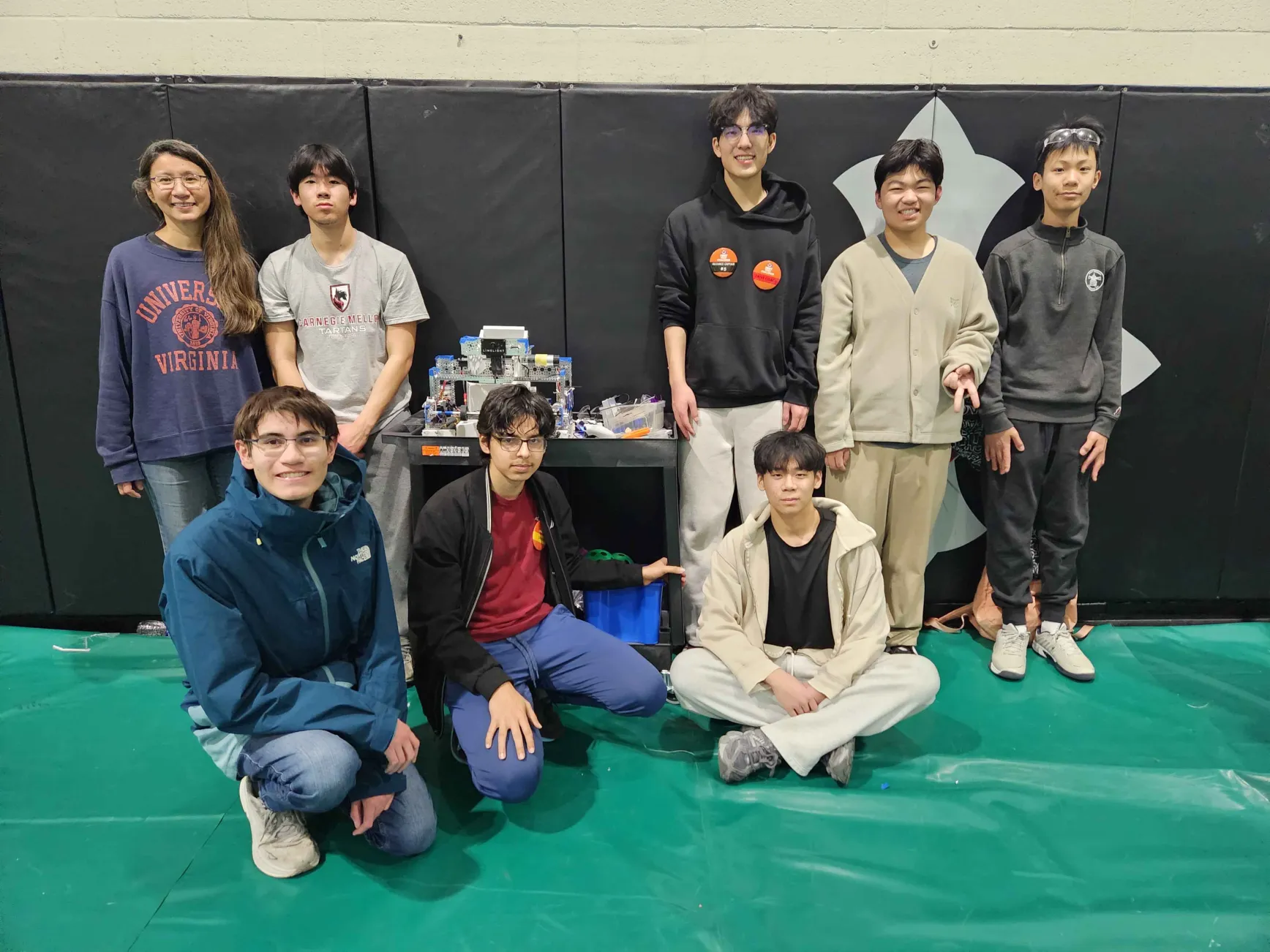
Richmond, VA Qualifier I
December 13, 2025
Innovate Award sponsored by RTX — 2nd Place
- Qual ranking
- 16 of 34
- Qual record
- 3W – 2L
Qualification matches
- 31Q1W
- 104Q2W
- 61Q3W
- 100Q4L
- 61Q5L
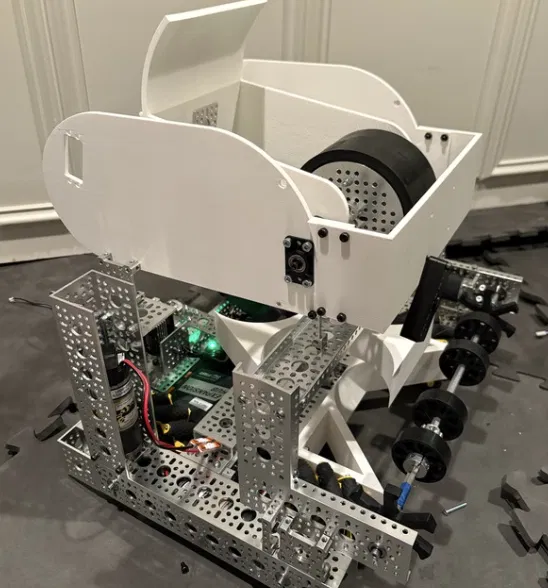
Our second competitive season: two qualifiers, two awards, a playoff run as alliance captain, and a robot built through more than eight major design iterations.
| Season game | DECODE, FTC 2025–26 |
|---|---|
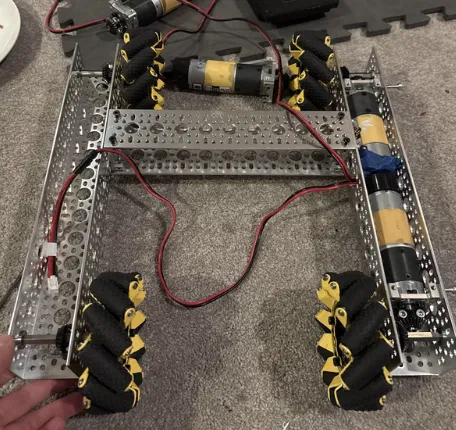
| Drive train | Mecanum, 4-wheel omnidirectional |
| Control system | REV Control Hub |
| Language | Java (FTC SDK) |
| Intake | Claw intake (V4), spring-loaded |
| Transfer | Horizontal claw-to-claw (V3) |
| Belt system | Timing belt, dual hex shaft, 1 servo |
| CAD | OnShape |
Awards this season: Innovate Award (RTX), 2nd place and the Control Award.
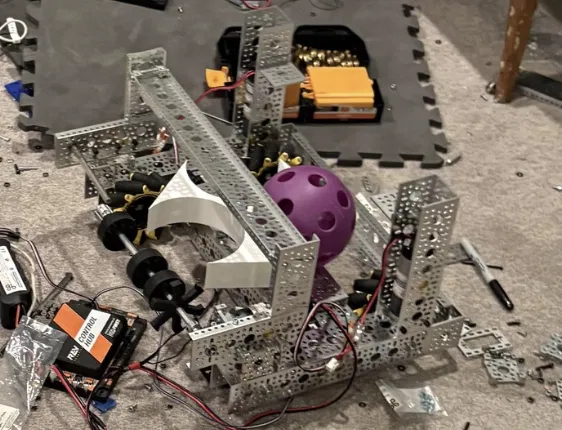
Every mechanism on the robot went through this cycle. The intake took four major versions, the claw four, and the transfer three.
At the start of each meeting, we identify the main problem to solve and create an action plan on a whiteboard. This keeps us focused and consistent throughout the session.
After narrowing down ideas, we make detailed whiteboard sketches with measurements and calculations. These act as the starting point for building prototypes.
We build prototypes with FTC-legal parts, test them, discuss improvements as a team, then refine in OnShape (CAD) to optimize and ensure precision for competition.
After sketching, we build working models using available parts. We then create a 3D CAD model in OnShape to make it easier to adjust components and achieve the best version.
We test thoroughly and compare the mechanism to original sketches. As a team we discuss strengths and weaknesses, deciding which parts to keep and which need improvement.
Through multiple targeted iterations we make the design simpler, more reliable, and more versatile. After satisfaction we CAD the final design and integrate with the full robot CAD.
Hardware
Built a 4-wheel mecanum drivetrain enabling full omnidirectional movement including strafing. Carefully tuned torque ratios through experimentation to balance traversal speed against pushing power on the field.
The intake and the claw, from first prototype to competition version. Each one is modelled in OnShape with a list of what worked and what did not.
V4, December 2025
Drag the slider or pick a version.
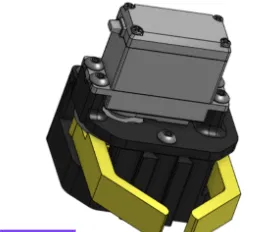
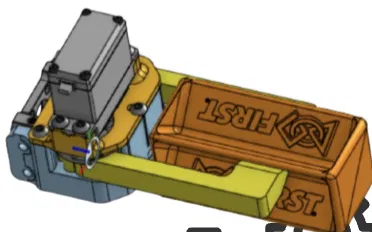
From the first research in September to the Alexandria qualifier in January, month by month.
September 2025
Planning
Extensive research on robot design for DECODE. Built extension pieces, field parameters, and custom game pieces to practice with. Began brainstorming robot strategy.
Early October
Hardware
Built the mecanum drivetrain. Began coding for wheel control and experimenting with torque ratios for the best balance of speed and pushing power.
Late October
Hardware
Began research on intake devices. Brainstormed shooter and sorting mechanisms for game element handling.
Early November
Hardware
Began experimenting with CAD models of intake, spindexer, and shooter in OnShape. Started first intake prototypes.
Late November
Software
Started testing effectiveness of different configurations. Iterated through multiple designs, refining CAD after each test.
Early December
Competition
Finalized claw/intake after extensive research — 4 intake iterations and 4 claw iterations. Competed at Richmond VA Qualifier I (Rank 16/34). Won Innovate Award (RTX) 2nd Place.
Late December
Hardware
Redesigned many parts of the robot in preparation for Alexandria. Addressed issues found at Richmond qualifier.
January 2026
Competition
Final robot touches complete. Competed at Alexandria VA Qualifier I — ranked 7th of 24, captained Alliance #5, made playoffs (2W–2L). Won the Control Award.
Our alliance score in every match, qualification and playoff. Green bars are wins, red bars are losses.
December 13, 2025
Innovate Award sponsored by RTX — 2nd Place
Qualification matches
January 17, 2026
Control Award
Qualification matches
Playoff matches
2nd Place
Richmond, VA Qualifier I, Dec 13, 2025
Recognized for our iterative engineering design process — going through 4 intake versions and 4 claw versions, documenting each with CAD models in OnShape and thorough pros/cons analysis.
Winner
Alexandria, VA Qualifier I, Jan 17, 2026
Recognized for our software innovations — autonomous programming, optimized wheel torque ratios, and driver control systems developed throughout the season.
We reached more than 230 students and families this season through workshops, STEAM events and coaching FIRST LEGO League teams.
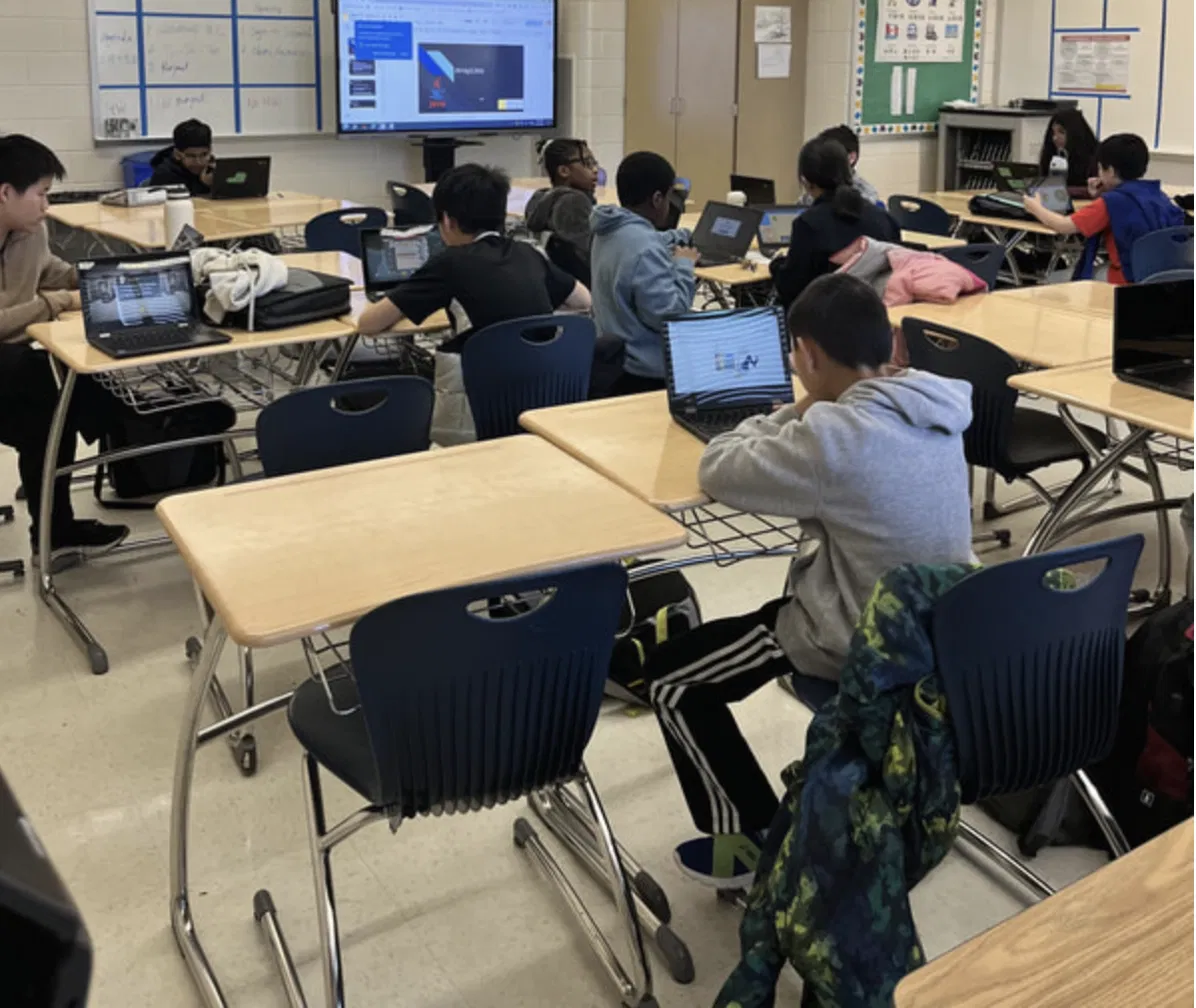
~30 students
Taught a Java fundamentals class at Herbert Hoover Middle School to inspire students to join FTC and learn programming basics. Covered variables, loops, and basic OOP concepts relevant to robot code.
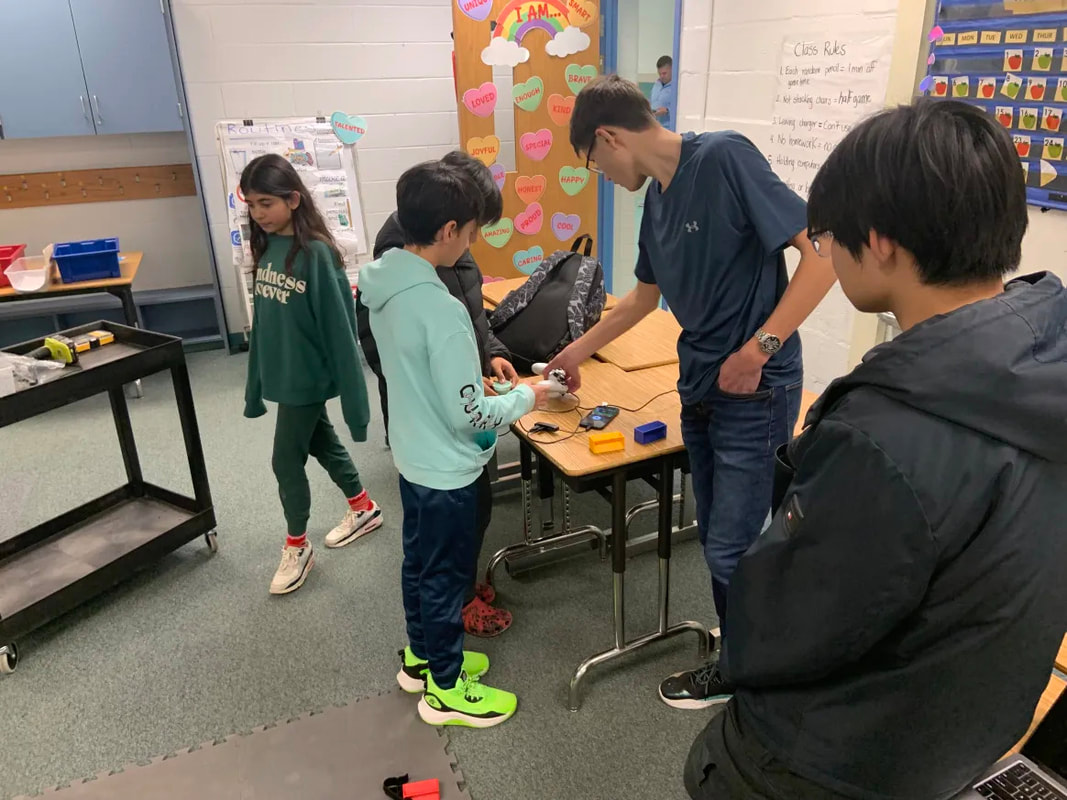
200+ families
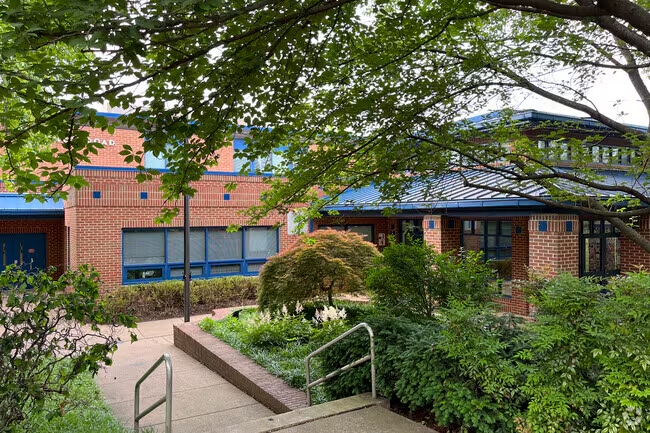
Brought our robot to Kent Gardens Elementary School's STEAM night. Demonstrated the robot, answered questions from families and students, and promoted FTC as a pathway for young engineers.
2 FLL teams
Encouraged Churchill Road Elementary students to start two FIRST LEGO League teams. Guided them through programming, robot design, teamwork, and their first season — helping build the next generation of FIRST competitors.
8 pictures